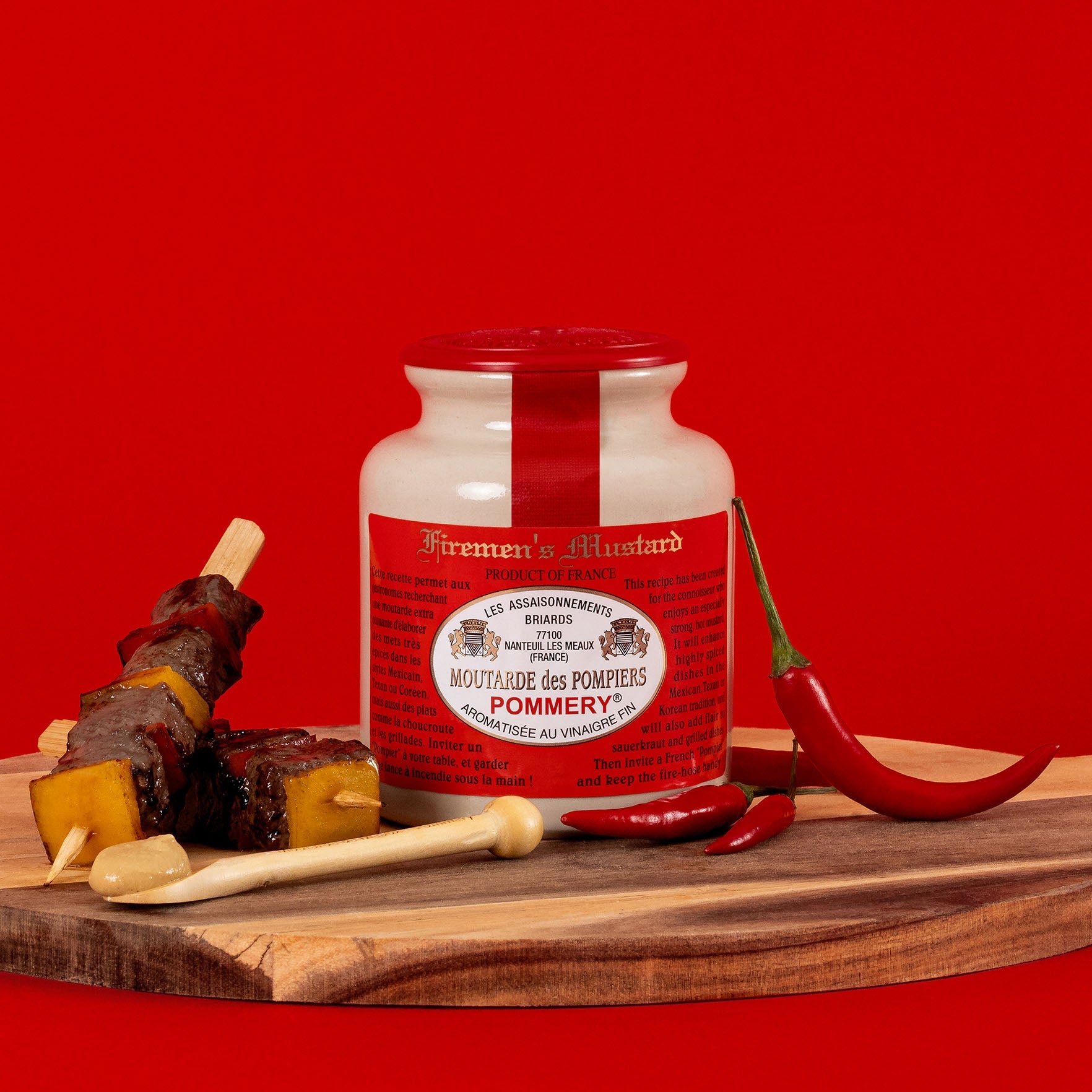

Old-style, coarse-grain mustard is easy to spot: whole grains, a granular texture, and a look quite different from the smooth mustard most people picture first. Because part of the seed is left uncrushed, it carries a distinct character in both looks and flavor. But not all coarse-grain mustards are made the same way — here's what sets them apart, and where Moutarde de Meaux® Pommery® fits into that picture.
What Sets a Coarse-Grain Mustard Apart?
A coarse-grain mustard starts with a different process: the mustard seeds are roughly crushed rather than ground into a fine powder the way smooth mustard is. Part of the seed stays intact in the finished product.
That translates into a few distinctive traits: a texture that gives a slight "bite" thanks to the visible grains; a more gradual release of flavor as the grains break down in the mouth; an artisanal look inherited from traditional production methods; and a bolder, longer-lasting flavor than a smooth mustard typically offers.
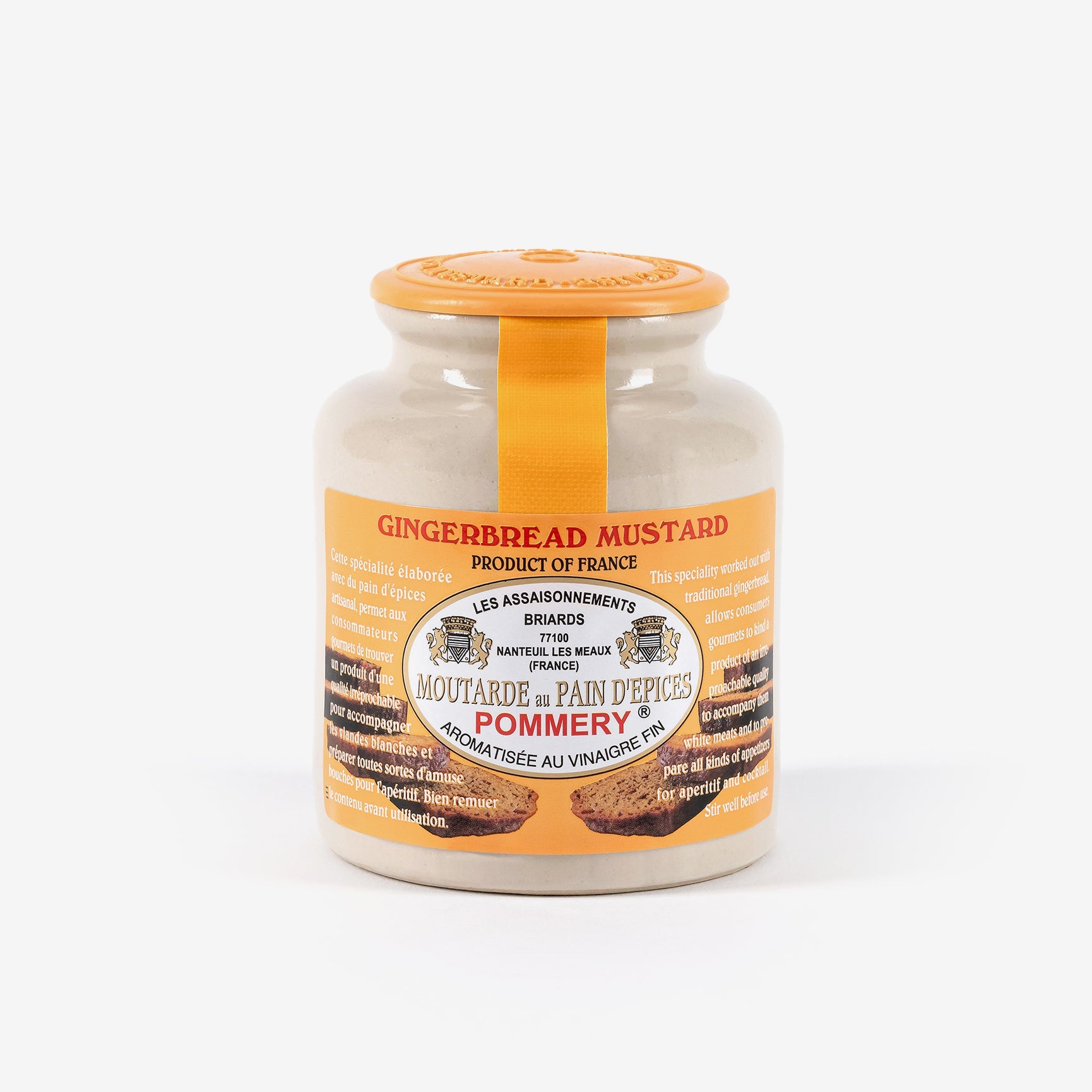
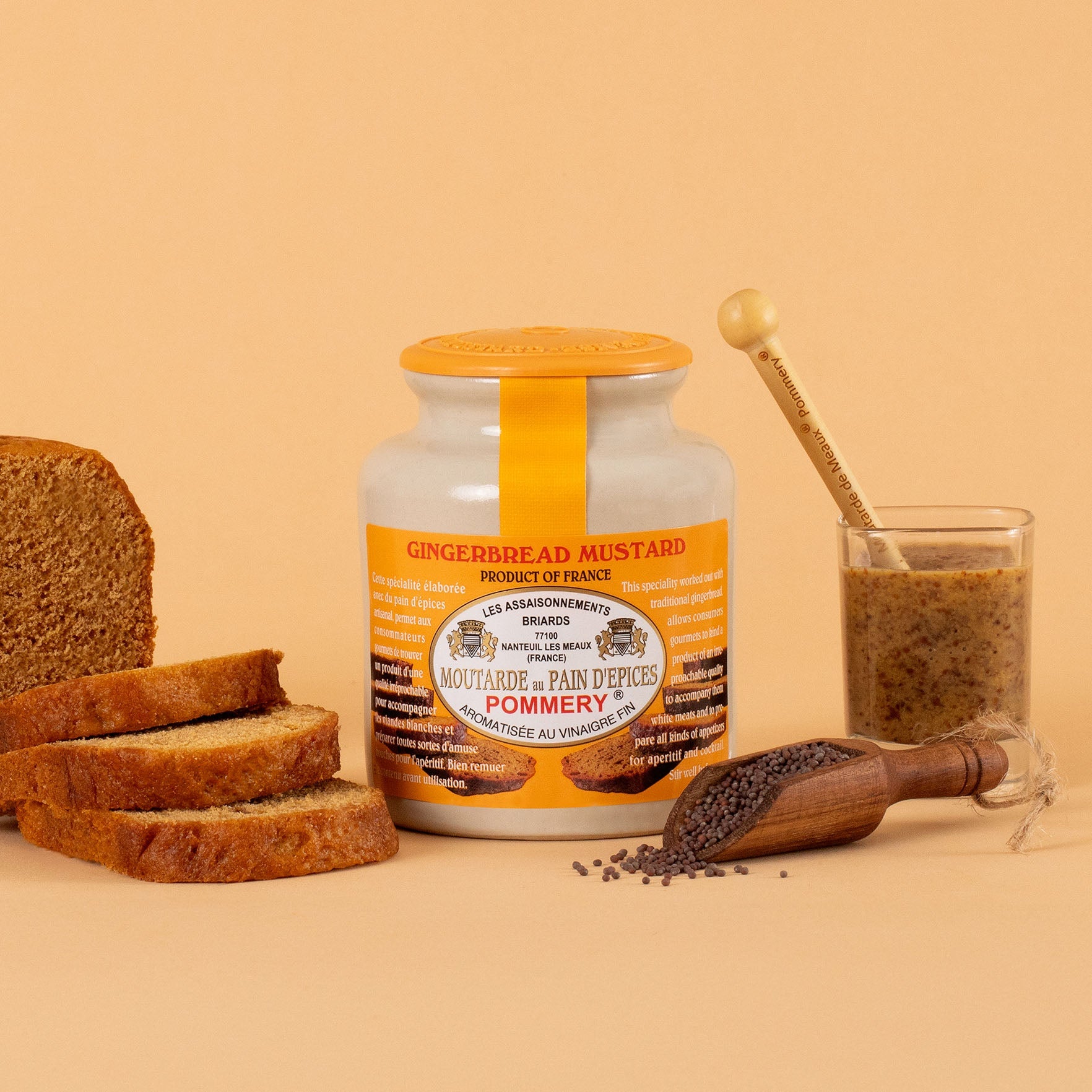
Moutarde de Meaux® Pommery®: A Benchmark Recipe
History and Tradition
Moutarde de Meaux® is linked to the year 1632, when it is said to have already appeared on royal tables. In 1760, a dignitary of the Meaux chapter passed the secret of its production on to J.B. Pommery.
The recipe then moved through the generations: in 1890, the Chamois family — who had run the Vinaigrerie du Lion since 1865 — took over the house. In 1949, Pierre Chamois, the third generation, revived mustard production. In 1996, Philippe Chamois, the fourth generation, settled the business in Nanteuil-lès-Meaux, in Seine-et-Marne, where the mustard is still made today — and the house entered the World-Wide Mustard Competition for the first time. Today it is run by the Chamois family's fourth and fifth generations. Since 1996, the house has been regularly recognized at that competition across several categories — including Spirit for Moutarde Royale® au Cognac Pommery® and Honey Mustard for Moutarde au Miel Pommery® — culminating in the World's Best Mustard title in the Whole Grain category in 2019.
What Makes Traditional Moutarde de Meaux® Distinctive
Composition: a selection of brown mustard seeds, water, vinegar, salt, and spices — a deliberately short ingredient list. The vinegar is a 100% French white vinegar made from sugar beet, chosen for its neutral taste that lets the seed's flavor come through. The salt is French sea salt, sun-dried.
Presentation: the mustard is packed in a glazed stoneware jar, a material that shields the contents from UV light and temperature swings. The jar is closed with a natural, non-agglomerated cork stopper — sourced from a Living Heritage company in the Landes region — and sealed with red wax.
Recognition: the house holds IFS Food certification for food safety, the "Produit en Île-de-France" label, and is recognized as a "Producteur Artisan de Qualité" by the Collège Culinaire de France.
Comparing the Pommery® Varieties
1. Moutarde de Meaux® Pommery® Classic
Strengths: a recipe tracing back to the 17th century, whose production secret was passed to the Pommery family in 1760; grainy texture; an 18-month shelf life stored in a cool, dry place; the house's historic reference, recognized well beyond France.
Uses: the traditional accompaniment to cold cuts and charcuterie, or a way to lift a sauce or vinaigrette.
2. Moutarde Royale® au Cognac Pommery®
Strengths: enriched with cognac, giving it a rounder, more complex flavor than the classic mustard.
Uses: pairs with a good cut of red meat, works into more elaborate sauces, or serves as the base for a marinade for premium cuts.
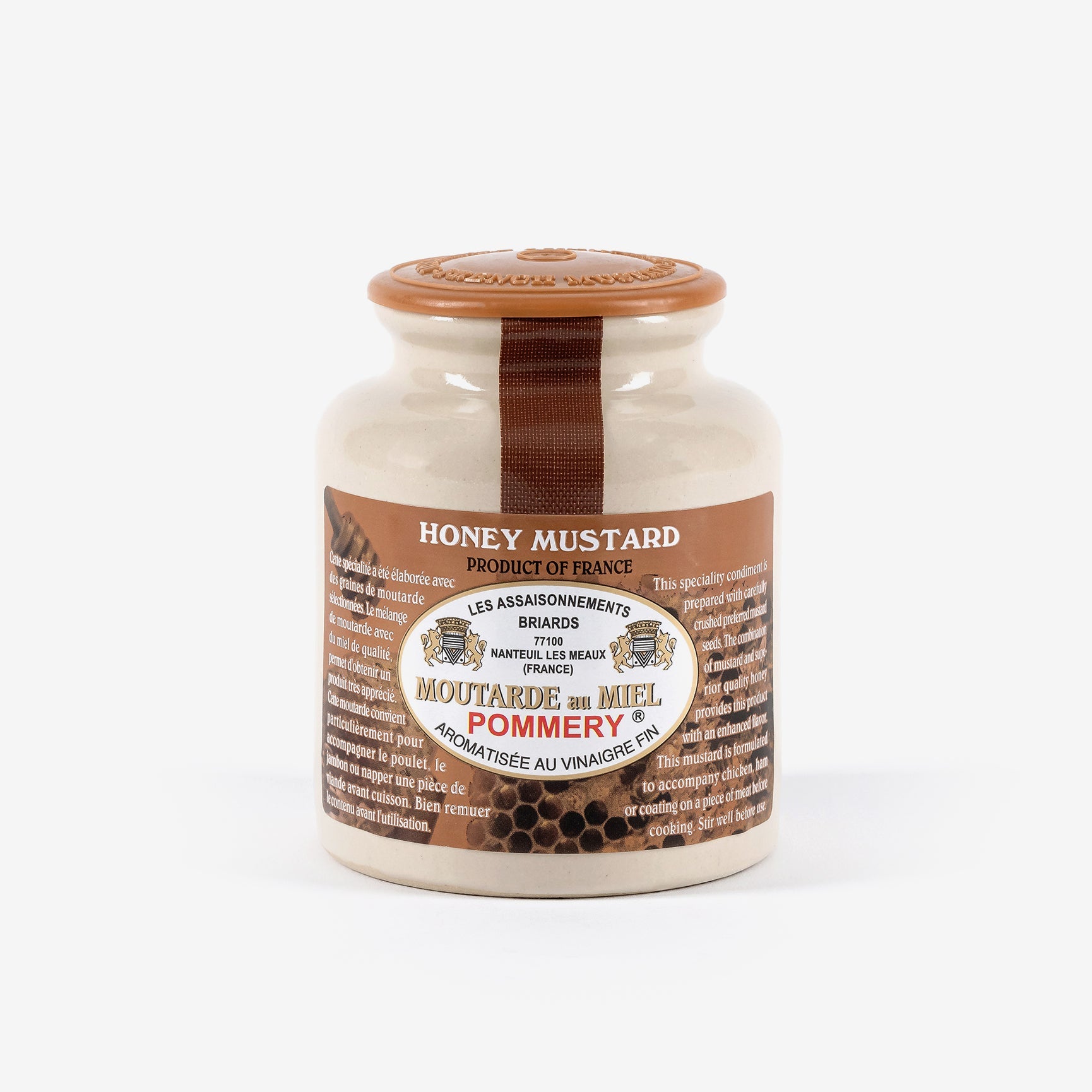
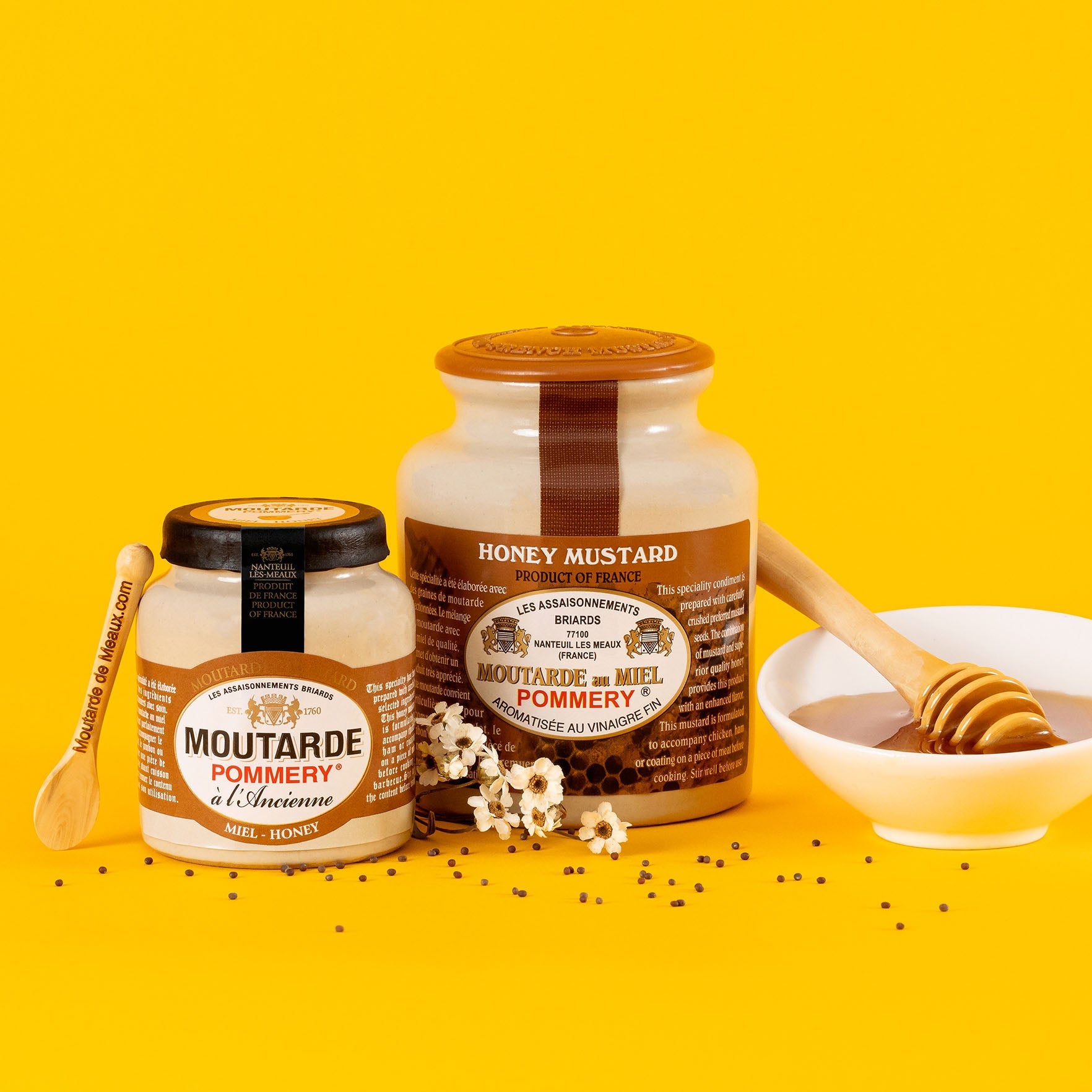
3. Moutarde au Miel Pommery®
Strengths: the mustard's heat is softened by honey, with a touch of caramelization when cooked.
Uses: enjoyed straight from the spoon as a side, glazes a pork roast, and works into sweet-savory marinades.
4. Moutarde citron & basilic Pommery®
Strengths: this variety pairs candied lemon zest with the coarse-grain recipe, keeping its characteristic texture. The result is a mild, tangy mustard, brighter than the classic version.
Uses: its mildness and tang make it a good match for fish and poultry, whose more delicate flavors it doesn't overpower.
The Petits Gourmets® Range
A Range Built for Discovery
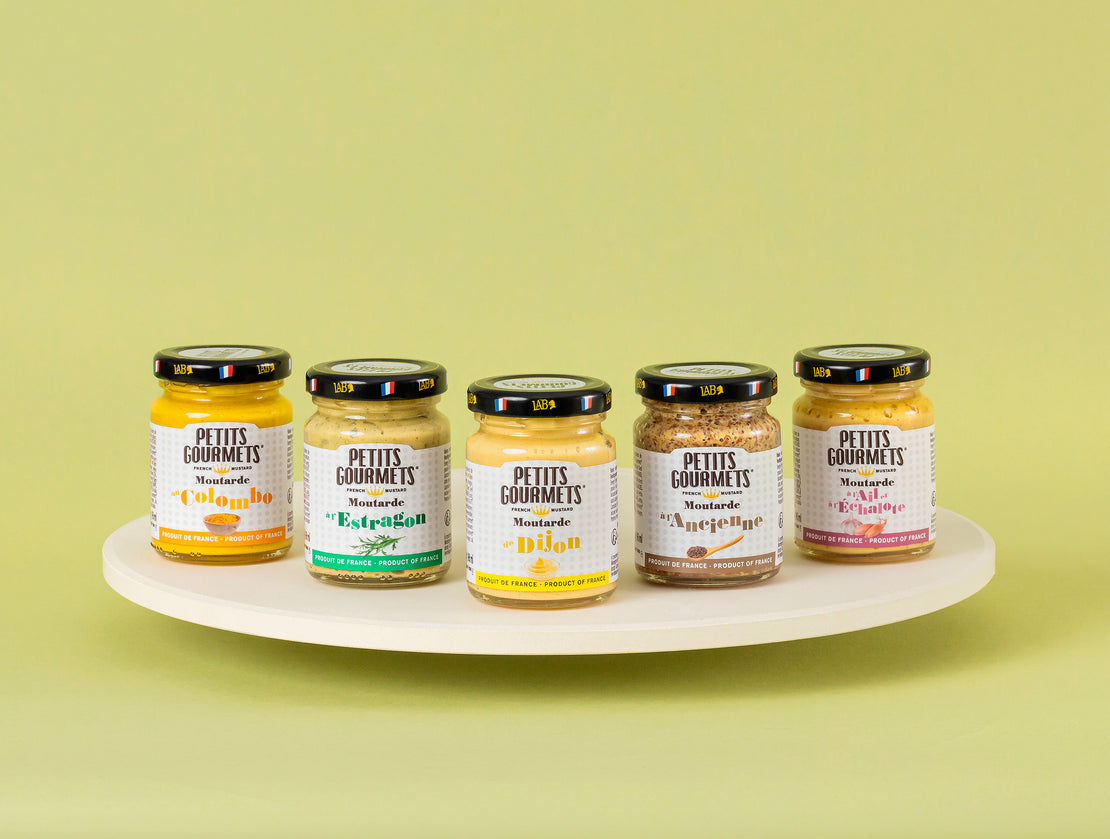
Petits Gourmets® is a range designed to explore several mustard profiles in a smaller format: 100g glass jars closed with a twist-off cap for everyday convenience.
Available varieties: À l'Ancienne, for the classic grainy texture; Dijon, for a smooth, sharp mustard; Estragon, for a herbal, aromatic note; Colombo, for those who enjoy exotic spice blends; and Ail & Échalote, for a more assertive mustard in cooking.
A practical format: the 100g size makes it easy to try several varieties without commitment, or to bring to the table for a fondue or a pierrade, where each guest can have their own jar.
How It Differs from Sifted (Smooth) Mustard
Texture and Production
Sifted mustard follows a different process: the seeds are finely ground into a powder, and the resulting paste is passed through very fine sieves that hold back any coarse particles. This sifting step, regulated in France since 1937, is used in both artisanal and industrial production alike — it's what gives the mustard its perfectly smooth, even texture.
Complementary Uses
Coarse-grain mustard works well in meat sauces, rustic vinaigrettes, and marinades, where its texture adds character. Sifted mustard, on the other hand, blends more easily into emulsified sauces and light vinaigrettes, where an even texture and precise dosing matter most. Each has its place, depending on the recipe and the result you're after.
Tasting Guide and Pairings
Choosing by Occasion
Beyond picking a variety, here are a few practical pointers for building your pairings:
- For a charcuterie board or cold cuts: Moutarde de Meaux® Pommery® Classic, a small dollop set beside each slice.
- For grilled red meat or a prime cut: Moutarde Royale® au Cognac, served alongside or worked into the marinade a few hours before cooking.
- For a pork roast or roasted poultry: Moutarde au Miel, brushed on partway through cooking so it caramelizes without burning.
- For pan-seared fish or poached poultry: Moutarde citron & basilic, whose acidity stays in the background.
- For a fondue, a pierrade, or a family tasting session: the Petits Gourmets® range, split across several small jars on the table.
Storage and Serving
Each jar keeps for 18 months in a cool, dry place, with no need for refrigeration after opening; only the heat mellows slightly over time. To open it, crack the wax with the back of a knife, slide the tip between the cork and the stoneware, work it around the rim, then brush away the wax residue before serving.
Conclusion
These mustards aren't in competition with one another — they simply serve different purposes. Moutarde de Meaux® Pommery®, whose production secret has passed down from 1760 to today's Chamois family, and which the World-Wide Mustard Competition named World's Best Mustard in 2019, remains the house's grainy benchmark. The other varieties — Royale® au Cognac, au Miel, citron & basilic, and the Petits Gourmets® range — carry that spirit into other uses, while sifted mustards answer other needs in the kitchen, particularly when an even texture is what a recipe calls for. The right choice comes down to the dish, the occasion, and your own taste.
Want to know the best food pairings for Pommery® mustards? Check out our article!