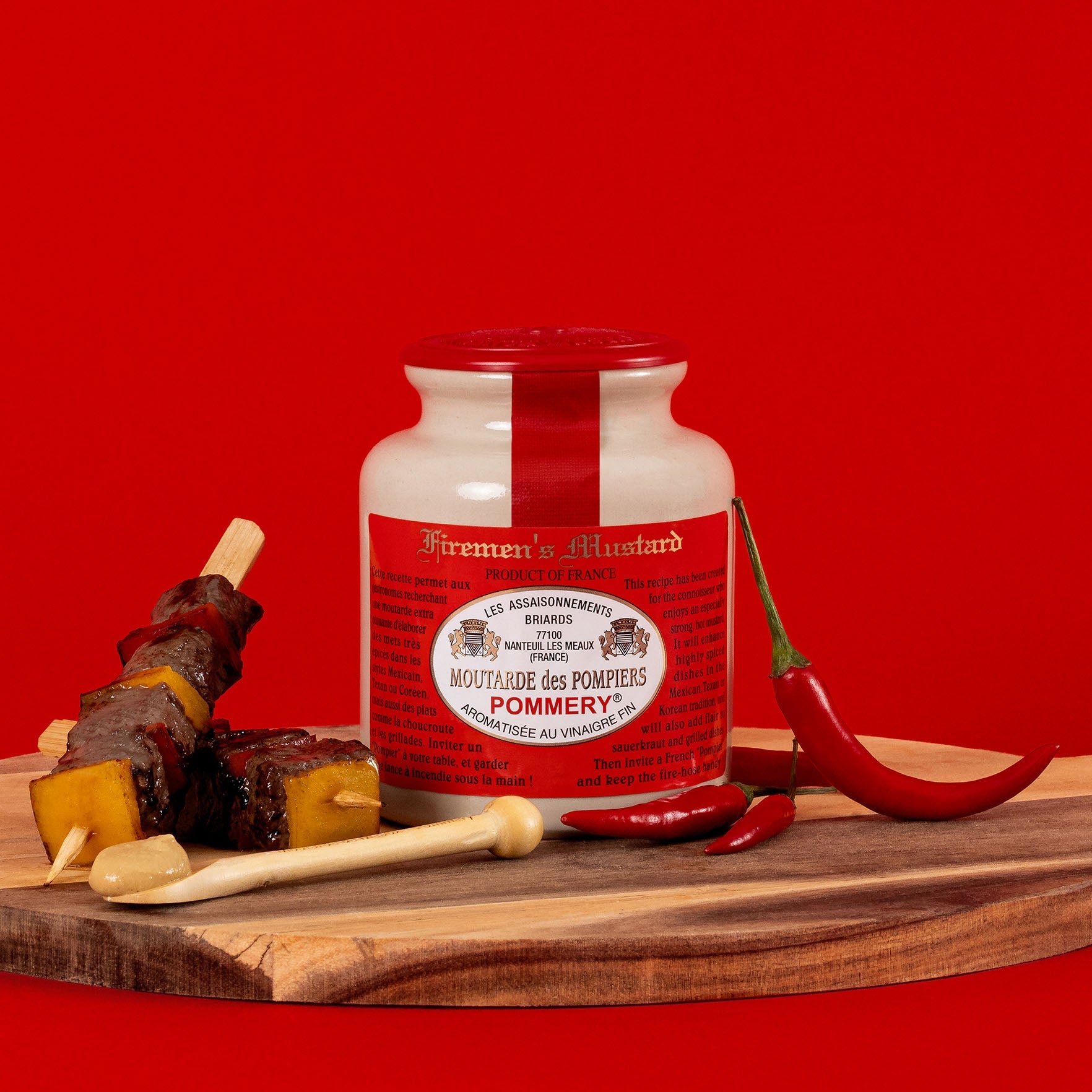

If there's one product that single-handedly captures the reach of French gastronomy around the world, it's Dijon mustard. You'll find it in every kitchen, from the corner bistro to Michelin-starred dining rooms — the go-to condiment for that sharp, nose-tingling kick nothing else quite delivers.
Yet behind its familiar label lie strict regulations, centuries of craftsmanship, and an aromatic subtlety most people never stop to consider.
What Is Real Dijon Mustard, Exactly?
Despite what the name suggests, Dijon mustard isn't a protected designation tied to a specific patch of French soil — it's a technical and legal definition.
A Recipe-Based Name, Not a Regional One
It's a common misconception: many assume every jar of Dijon mustard must come from Burgundy. In reality, the name is governed by French regulation whose first version dates back to a 1937 decree — since repealed and replaced by Decree No. 2000-658 of July 6, 2000, which remains in force today. That text defines "Dijon" as a manufacturing process and a recipe, not a place of origin.
It also sets precise composition thresholds: a dry extract of at least 22% and a fat content of at least 8%, which together guarantee a dense, flavor-concentrated paste.
So a mustard can legally be labeled "Dijon" even if it's made far from Burgundy, as long as it scrupulously follows the processing steps and ingredient standards French law lays out.
The Official Ingredients: Brown Seeds, Vinegar (or Verjuice), and Salt
Dijon mustard's recipe rests on three pillars.
The strong seeds, first: exclusively brown mustard seeds (Brassica juncea) and/or black seeds (Brassica nigra) — two distinct species, not two colors of the same plant. Brown seed now dominates production by a wide margin, since it's far easier to harvest mechanically than the more demanding black seed.
The acidic liquid, next: historically verjuice, the tart juice of unripe grapes, gradually replaced by vinegar in most recipes. At Pommery®, that's a 100% French white vinegar made from sugar beet — its neutral flavor stays out of the way, letting the seed's own aromas come through.
Salt, finally, for seasoning and natural preservation.
A Timely Note: The Shortage Question
You may have noticed empty shelves in recent years. Global mustard seed production has taken a real hit from extreme weather, particularly in Canada — the world's top exporter, ahead of France. That supply squeeze has pushed French mustard makers to ramp up seed cultivation in Burgundy again, to secure their own supply chains.
How Is Dijon Mustard Made?
Choosing the Seeds
Dijon mustard is made from brown seeds (Brassica juncea) and, more rarely today, black seeds (Brassica nigra). Unlike milder white seeds, both varieties carry a high concentration of sinigrin, the compound responsible for the condiment's characteristic bite.
Grinding and Sieving
Soaking (maceration): the seeds are steeped in liquid to soften their outer husk.
Grinding: the seeds are crushed between millstones.
Sieving: the step that sets Dijon apart from old-style, whole-grain mustard — the husks are removed. The 2000 decree spells out exactly how fine: residual husk can't exceed 2% of the finished product's weight.
De-bittering: the paste then rests, allowing some of the seed's natural bitterness to dissipate.
What Makes Dijon Mustard Unique?
The Signature Bite: Allyl Isothiocyanate
When the seed is crushed and meets liquid, an enzymatic reaction releases allyl isothiocyanate — the volatile compound behind that sharp kick that hits the nose rather than burning the tongue.
Dijon Mustard vs. Burgundy Mustard (PGI)
The two names are often confused, but they follow different logics.
Dijon mustard is a recipe protected by French law, with no requirement on where the seeds or the liquid come from.
Burgundy mustard, on the other hand, has held a Protected Geographical Indication (PGI) since 2009 — one that imposes a strict regional footprint: the seeds must be grown in Burgundy, and the paste is made with white Burgundy AOC wine instead of vinegar.
So a mustard can be "Dijon" without being "Burgundy" — and, conversely, a PGI Burgundy mustard almost always follows the Dijon recipe as well.
Comparison Table: Dijon vs. Old-Fashioned Mustard
For those who love tradition, discover our Pommery® Dijon Mustard in a stoneware jar, a timeless format that keeps all of the product's strength intact.
How to Use Dijon Mustard in the Kitchen
The Classics: Mayonnaise, Vinaigrette, and Warm Sauces
In mayonnaise, it acts as a natural emulsifier: the lecithin in the seed helps bind oil and egg yolk into a stable, silky texture that holds.
In a vinaigrette, it does the same job, holding oil and vinegar together instead of letting them separate.
In a warm sauce — alongside white meat or fish — it adds a bright edge of acidity that lifts the whole dish.
As a Crust or Marinade
Brushing mustard over a roast or a fillet before cooking forms a thin protective crust that helps seal in the juices while seasoning the surface.
Tips for Controlling the Heat
To keep its full punch, stir it in at the end of cooking rather than the beginning — sustained heat dissipates the sharpness quickly.
To mellow it out, blend it with a little honey or crème fraîche, which round out its character without masking it entirely.
Storage and Benefits
An unopened jar keeps for several years without issue. Once opened, it's best kept in the refrigerator — not for food-safety reasons (mustard has naturally antibacterial properties and won't spoil at room temperature), but to preserve its bite: left out of the fridge, it loses strength faster and browns more quickly.
Nutritionally, Dijon mustard is low in calories and makes a smart swap for butter or oil when you want to add flavor without adding richness. It's traditionally credited with aiding digestion — a long-standing belief, though one worth taking with a grain of salt: no official health claim to that effect is currently recognized in the European Union.
Frequently Asked Questions
Does Dijon mustard have to be made in Dijon? No — it's a designation that protects a manufacturing process and a recipe, not a place of origin. Historic houses like Fallot, Maille, and Amora have kept close ties to Burgundy and continue that regional heritage. Other houses, like Pommery®, make their Dijon mustard elsewhere in France while strictly following the same regulatory standard — that's the case for Pommery® Dijon Mustard (also known as Pommery® Lion Mustard), a fine, sieved range sold in a stoneware crock, distinct from the whole-grain Moutarde de Meaux®, made with a 100% French sugar-beet white vinegar at a site certified IFS Food and awarded the Collège Culinaire de France's "Producteur Artisan de Qualité" label.
Why is Dijon mustard stronger than other mustards? Because it relies almost entirely on brown seeds (and sometimes black), which carry more sinigrin than the milder white seed, and because sieving removes the husks that, in old-style mustard, soften the bite somewhat.
Does Dijon mustard contain gluten? No, naturally not: neither the mustard seed nor the vinegar contains any.
What is verjuice? A tart juice pressed from unripe grapes — the historic souring agent in mustard, before vinegar became the norm in most recipes. Pommery® today uses a 100% French white vinegar made from sugar beet, with a neutral flavor that lets the seed's own aromas come through fully.